
Guide 6 of 44
Reading nowMTD Quarterly Update or Year-End Tax Return? What Goes Where
2026-07-16
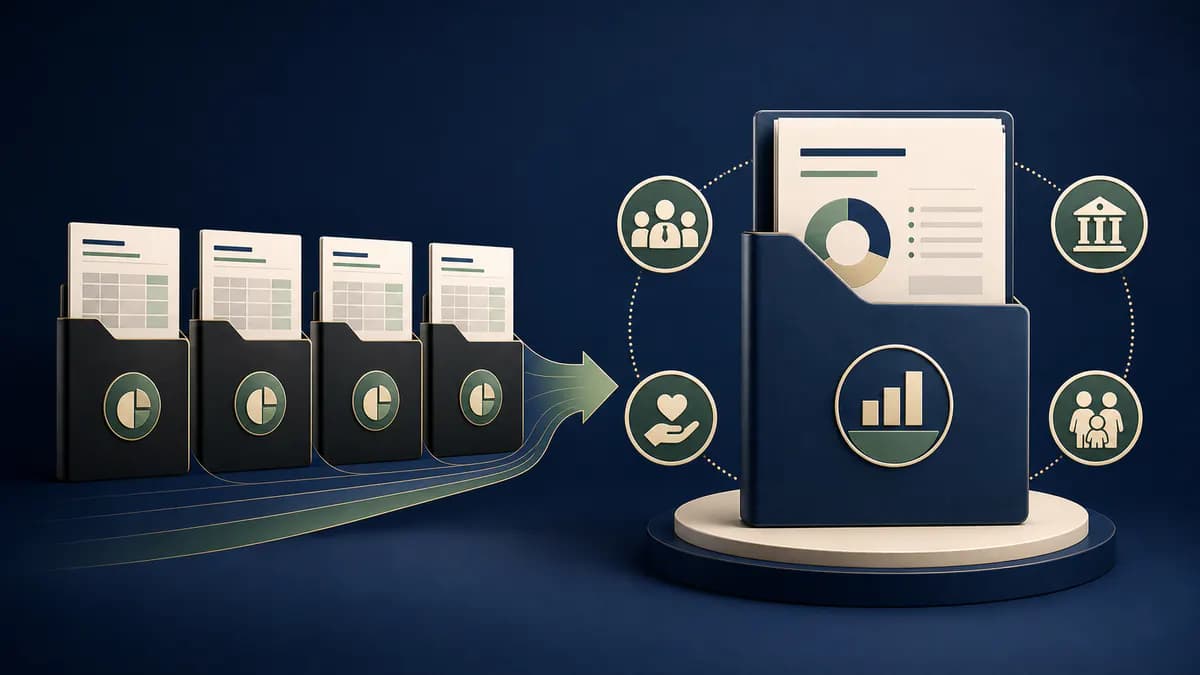
An MTD quarterly update is not a smaller tax return. It is a cumulative summary of income and expenses for one self-employment or property source.
Your year-end tax return has a different job. It brings together the full tax year, including other income, reliefs and charges that do not belong in the quarterly business figures.
What belongs in a quarterly update?
For each business or property source, the quarterly update contains cumulative income and expense totals from the start of the tax year to the update period end.
HMRC says you do not need to make every accounting or tax adjustment before sending a quarterly update. The figures should come from accurate digital records, but the update is not the final calculation of your tax.
Flonancial's current quarterly flow sends income and consolidated-expense totals for supported sole-trader and UK-property sources with annual turnover below £90,000.
What belongs at year end?
After the tax year, you submit one year-end tax return through compatible MTD software. Before submitting it, you check the full-year business figures, make adjustments, claim reliefs and include other taxable income or gains.
HMRC may add information it already holds, such as PAYE income, pensions and CIS deductions. You remain responsible for checking it and adding anything missing, including savings interest and dividends.
Common items and where they go
| Item | Quarterly update? | Year-end tax return? |
|---|---|---|
| Sole-trader turnover | Yes, for that trade | Checked and finalised |
| UK property rent | Yes, for that property source | Checked and finalised |
| Ordinary allowable business expenses | Yes | Checked and adjusted if needed |
| PAYE employment income | No | Yes, HMRC may add it |
| UK savings interest | No | Yes, add or check it |
| Gift Aid donations | No | Yes, claim the relief if eligible |
| High Income Child Benefit Charge | No | Handled in the year-end tax position |
| Dividends | No | Yes |
| CIS deductions suffered | Not as a business expense | Yes, HMRC may add them |
Where do charitable donations go?
Do not include a personal charitable donation in the expense total for a sole-trader or property quarterly update. A Gift Aid donation is dealt with as part of your personal year-end tax position, subject to the Gift Aid rules.
A payment made by a business to a charity can have different rules depending on the legal structure and purpose. If it is not a straightforward personal Gift Aid donation, check the tax treatment before recording it.
What happens to PAYE income?
You do not mix salary from employment into your self-employment turnover. HMRC says it will normally add PAYE employment income it already holds to the year-end tax return. You must check that information before submitting.
What happens to bank interest?
Personal savings interest is not part of a sole-trader or property quarterly update. At year end, check what HMRC already knows and add any missing savings interest through compatible tax-return software.
What about the High Income Child Benefit Charge?
The charge is not a quarterly business expense and should not reduce the income or expenses you submit for a trade or property source. It forms part of your personal year-end tax position. HMRC also provides a separate PAYE route in some circumstances, but someone who needs to submit a tax return for another reason must follow the relevant tax-return process.
A worked example
Sam is employed, rents out a UK property, receives bank interest, makes Gift Aid donations and may owe the High Income Child Benefit Charge.
For the property quarterly update, Sam reports only the cumulative property income and relevant property expenses. Sam does not add salary or interest to rent, does not deduct the Gift Aid donation and does not enter the Child Benefit charge as a property expense.
At year end, Sam checks the full property figures, checks the PAYE information HMRC has added, includes the savings interest, records eligible Gift Aid and completes the Child Benefit charge information.
What Flonancial supports today
Flonancial's live service currently handles supported in-year quarterly updates for a sole-trader business or UK-property source with annual turnover below £90,000.
Flonancial's supported year-end tax return journey is live for straightforward sole-trader and UK-property cases. Do not assume the quarterly screens can record PAYE, savings interest, Gift Aid or the High Income Child Benefit Charge. The year-end flow checks your circumstances separately and diverts you before submission if you need compatible software or HMRC online services for a wider return.
The simple rule
If the figure belongs to the trading or property records for one income source, it may belong in that source's quarterly update. If it is personal income, a relief or a personal tax charge, it normally belongs in the year-end tax return instead.
Read HMRC's official guidance on quarterly updates and submitting the year-end tax return. Our guide to quarterly-update expenses covers the business side in more detail.
Why is flonancial free? What's the catch?
There isn't one. Your spreadsheet is parsed in your browser, the file never touches our servers. HMRC's API is free to use. We never see your individual transactions or bank details, we don't sell your information, and we don't show you ads. The mandatory MTD pieces, quarterly updates and the year-end tax return, will always be free.