
Cumulative Quarterly Updates: HMRC's New MTD Submission Model Explained
MTD quarterly updates are now cumulative, each submission replaces the last with year-to-date totals. Here's how HMRC's new model works and why it makes life easier.
Published 21 Apr 2026
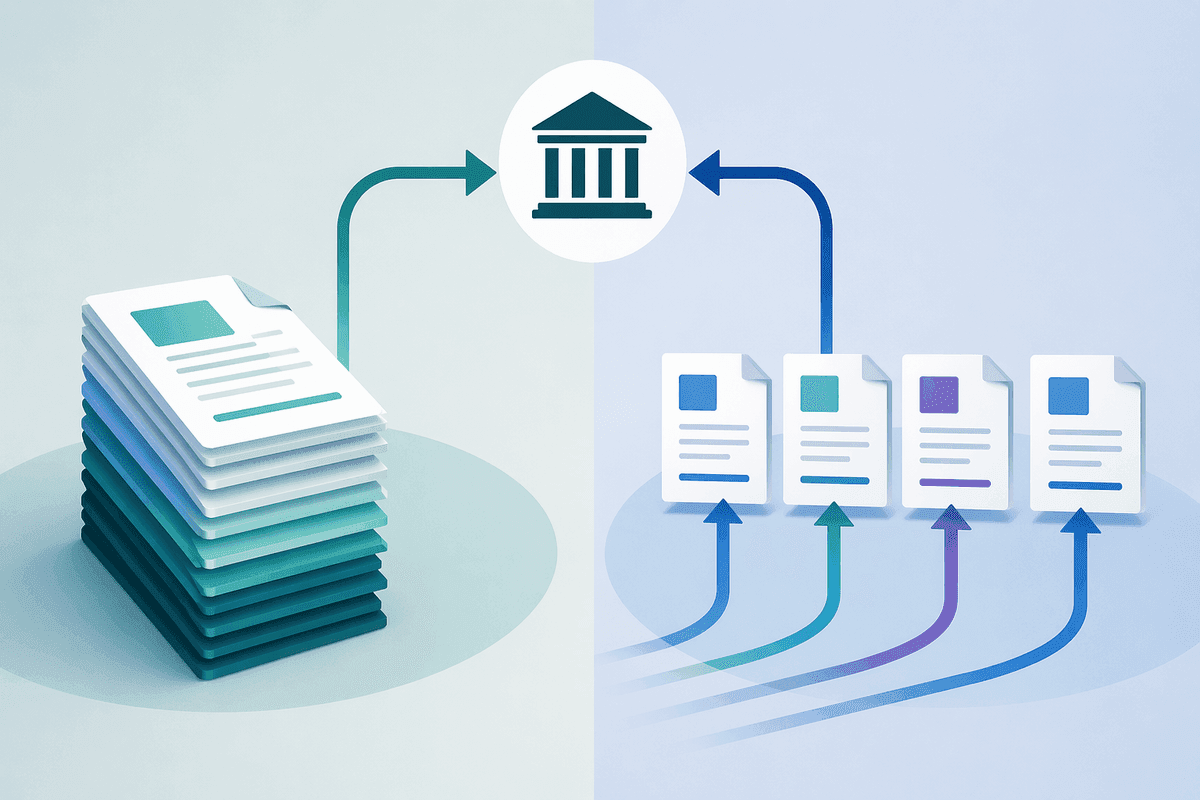
If you've read older guides about Making Tax Digital, you might have seen references to "standalone" quarterly updates, submitting just that quarter's figures four times a year. That model is gone. Since April 2025, HMRC moved to a cumulative submission model, and it's how every MTD ITSA quarterly update now works.
What changed
Under the old (standalone) model, each quarterly submission contained only the figures for that specific three-month period. If you made a mistake in Q1, you had to submit a separate amendment for Q1 to fix it.
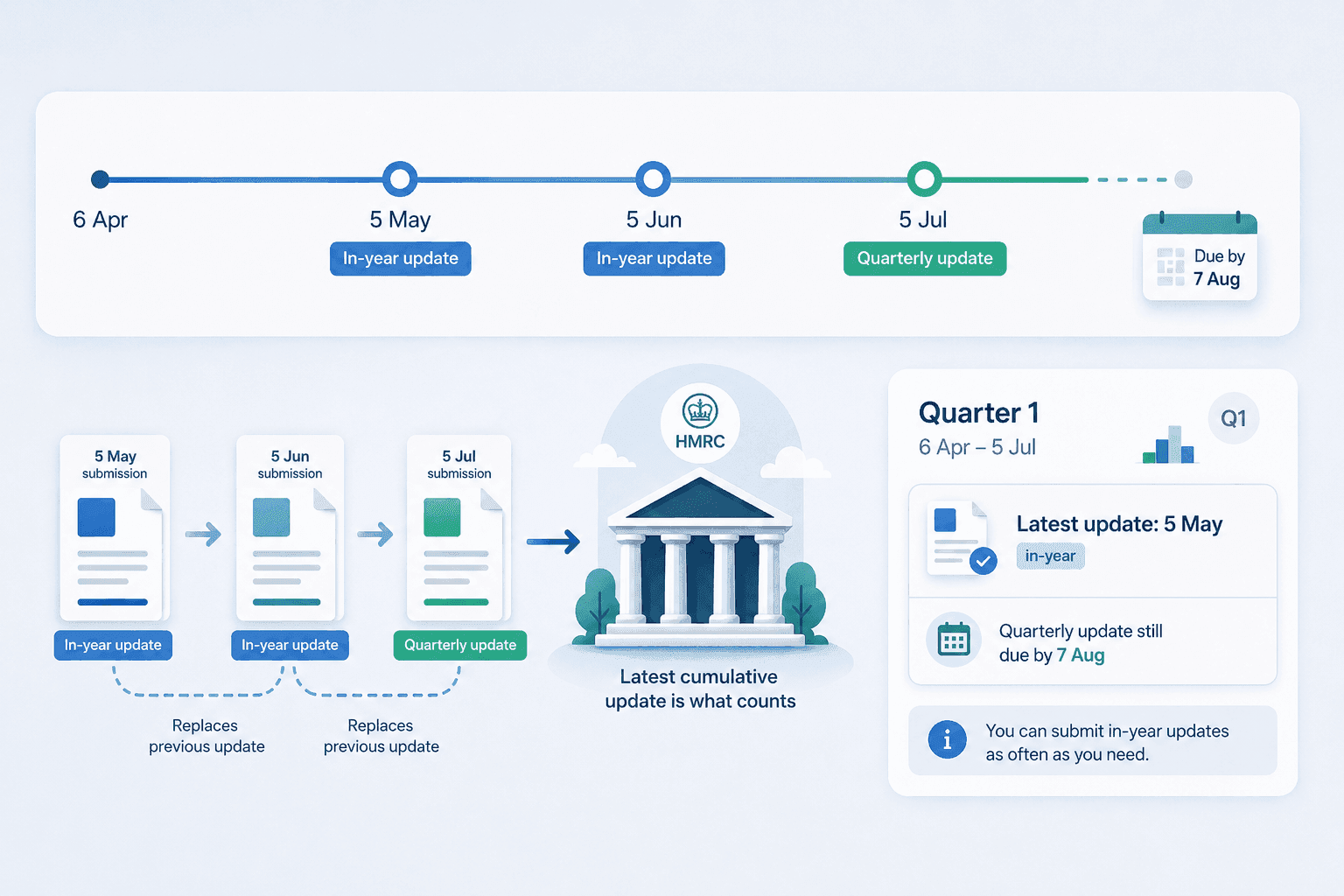
Under the new cumulative model, each submission contains your year-to-date totals. Q1 covers 6 April to 5 July. Q2 covers 6 April to 5 October, the whole period from the start of the tax year, not just July to October. Q3 covers 6 April to 5 January, and Q4 covers the full tax year up to 5 April.
Why the change?
HMRC switched to cumulative submissions to make corrections trivially easy. Spotted an error in your Q1 figures when you're preparing Q2? You don't need a special amendment, just submit your Q2 update with the correct year-to-date numbers, and the corrected total replaces whatever was there before.
It also reflects how most sole traders and landlords actually think about their finances, you don't reset your books every three months, you watch your year-to-date numbers grow.
How it works in practice
Imagine you're a freelance designer with these quarterly turnovers:
- Apr–Jun: £8,000 turnover, £1,500 expenses
- Jul–Sep: £12,000 turnover, £2,200 expenses
- Oct–Dec: £9,500 turnover, £1,800 expenses
- Jan–Mar: £14,500 turnover, £3,000 expenses
Your four MTD submissions would contain:
- Q1 (due 7 Aug): Turnover £8,000, Expenses £1,500
- Q2 (due 7 Nov): Turnover £20,000, Expenses £3,700
- Q3 (due 7 Feb): Turnover £29,500, Expenses £5,500
- Q4 (due 7 May): Turnover £44,000, Expenses £8,500
Each submission replaces the previous one. HMRC always has the latest year-to-date snapshot.
What if you spot a mistake?
Just resubmit. There's no separate amendment process and no penalty for correcting your own figures before the year-end tax return. Submit a fresh cumulative update with the right numbers, and the previous submission is overwritten.
You can resubmit as many times as you want during the tax year. HMRC just keeps the most recent one.
You can submit more often than quarterly if you want
The four quarterly deadlines (7 August, 7 November, 7 February and 7 May) are the minimum. HMRC also lets you send "in-year updates" at any cadence in between, weekly, monthly, fortnightly, even mid-month, as long as a valid cumulative update for each quarter lands by its deadline.
Each in-year update is still cumulative from 6 April. You just pick an earlier period end date inside the current quarter. Continuing the freelance designer example above:
- 5 May (in-year, optional): Turnover £2,800, Expenses £500 (six weeks into Q1)
- 5 June (in-year, optional): Turnover £5,400, Expenses £900
- 5 July (Q1, mandatory by 7 August): Turnover £8,000, Expenses £1,500
Each later submission overwrites the earlier one on HMRC's side. None of the in-year updates are mandatory, but they can help you spot mistakes earlier, smooth out workload before the deadline, or share more current figures with a mortgage lender or accountant.
Flonancial currently submits the standard quarter-end update, the mandatory cumulative figures for each quarter. More frequent in-year updates are something HMRC allows, but flonancial doesn't expose them in this release; you upload your spreadsheet and submit the quarterly update for each quarter.
What about Q4?
Your Q4 submission (due 7 May after the tax year ends) is your final cumulative quarterly update, the full year's figures. It's not your year-end tax return; that's a separate end-of-year submission that confirms everything and triggers your tax bill. Flonancial includes the supported year-end tax return for straightforward sole-trader and UK-property cases; if your return has income, reliefs or adjustments outside that lane, use HMRC online services, another compatible product or your accountant for the year-end step.
The practical takeaway
You don't need to track quarter-by-quarter increments separately. Your spreadsheet just needs to show your running totals from 6 April. Each quarter, upload it, and flonancial sends the latest year-to-date figures to HMRC. That's the whole process.
More on deadlines and penalties

Why is flonancial free? What's the catch?
There isn't one. Your spreadsheet is parsed in your browser, the file never touches our servers. HMRC's API is free to use. We never see your individual transactions or bank details, we don't sell your information, and we don't show you ads. The mandatory MTD pieces, quarterly updates and the year-end tax return, will always be free.