
Making Tax Digital for Cleaners & Domestic Service Providers
Self-employed cleaners and domestic workers: MTD for Income Tax is now live for the first 2026 group. Here's how to submit for free.
Published 21 Mar 2026 · Updated 21 Oct 2026
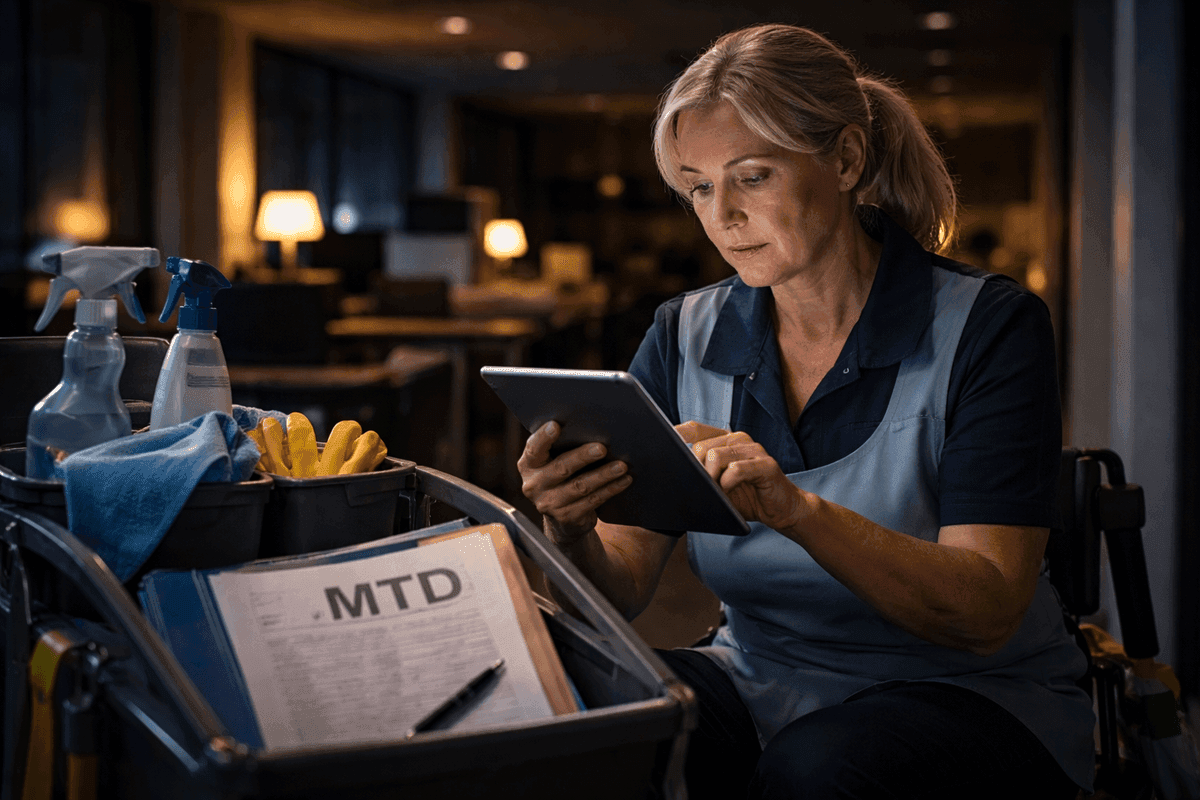
If you're a self-employed cleaner, housekeeper, or domestic service provider, Making Tax Digital for Income Tax may already affect you. Since 6 April 2026, sole traders with qualifying income over £50,000 have had to keep digital records and submit quarterly updates to HMRC. The threshold drops to £30,000 from April 2027 and £20,000 from April 2028.
Am I self-employed?
This is the first question to answer, because MTD only applies to self-employed sole traders. If you work through an agency and they pay you a wage, deduct tax, and give you payslips, you're likely employed, and MTD doesn't apply to you.
If you find your own clients, set your own hours, provide your own supplies, and invoice or get paid directly, you're self-employed. If you're unsure, HMRC has a Check Employment Status tool that can help.
Does MTD apply to me?
- Self-employed cleaner with your own clients, yes, if your gross income is over the threshold
- Working through an agency that employs you, no
- Running a cleaning business as a sole trader, yes
- Limited company, no, this applies to sole traders only
Many self-employed cleaners won't hit the £50,000 threshold in 2026. But the threshold drops to £30,000 in 2027 and £20,000 in 2028. If you clean multiple properties and your total income across all clients is approaching those numbers, you'll be brought in. It's worth getting into good habits now rather than scrambling later.
Already VAT registered? If you charge VAT, you're most likely already using MTD-compatible software for your VAT returns. That same software may also handle MTD for Income Tax, check with your provider. Flonancial is bridging software for people who aren't already using accounting software.
What changes?
You'll need to send HMRC a quarterly summary of your income and expenses, four times a year instead of totalling everything up once for Self Assessment. When the annual turnover for that business is below £90,000, each update can contain two figures: total income and total expenses.
You still complete your annual Self Assessment as well. And you are not paying tax quarterly, the updates are reporting only.
What records do I need?
Digital records of every transaction, date, amount, and what it was for. A spreadsheet counts as a digital record. A paper notebook on its own doesn't.
The challenge for cleaners is often that individual payments are small and frequent. If you clean five houses a day, five days a week, that's a lot of transactions to track. The simplest approach is to log your daily total at the end of each day, you don't need a separate line for every client if you record the daily total and keep your own records of who paid what.
Common expenses for cleaners
- Cleaning products and supplies (if you provide your own)
- Equipment (vacuum cleaner, steam cleaner, mop, bucket)
- Travel costs between clients (fuel, public transport, parking)
- Vehicle costs if you drive to jobs (insurance, maintenance, road tax)
- Insurance (public liability)
- Phone costs (business use)
- Uniforms and protective clothing (rubber gloves, aprons)
- DBS check fees
- Advertising costs (flyers, online listings)
- Home office costs if you do admin from home (proportion of utilities)
Note: if your clients provide the cleaning products and equipment, you won't have those expenses to claim, but you also won't need to buy them. Your expense profile depends on how you work.
Keep receipts for at least six years, HMRC can request evidence of your expenses during that period.
Do I need accounting software?
No. If you keep your records in a spreadsheet, even a simple one listing your daily income and weekly expenses, bridging software can submit your quarterly totals to HMRC. No need for a full accounting package or a monthly subscription.
Flonancial is free bridging software. Upload your spreadsheet, pick the cells with your income and expense totals, and submit. That's it.
Getting started
Even if you're below the MTD entry threshold now, having digital records in place means you won't be caught out when it drops. If this business has annual turnover below £90,000, download the free flonancial MTD template to get started, it's set up with income and expense columns and a flo tab that auto-calculates your totals for HMRC. Create a free flonancial account and you can send your figures to HMRC in minutes when the time comes.
More on your trade


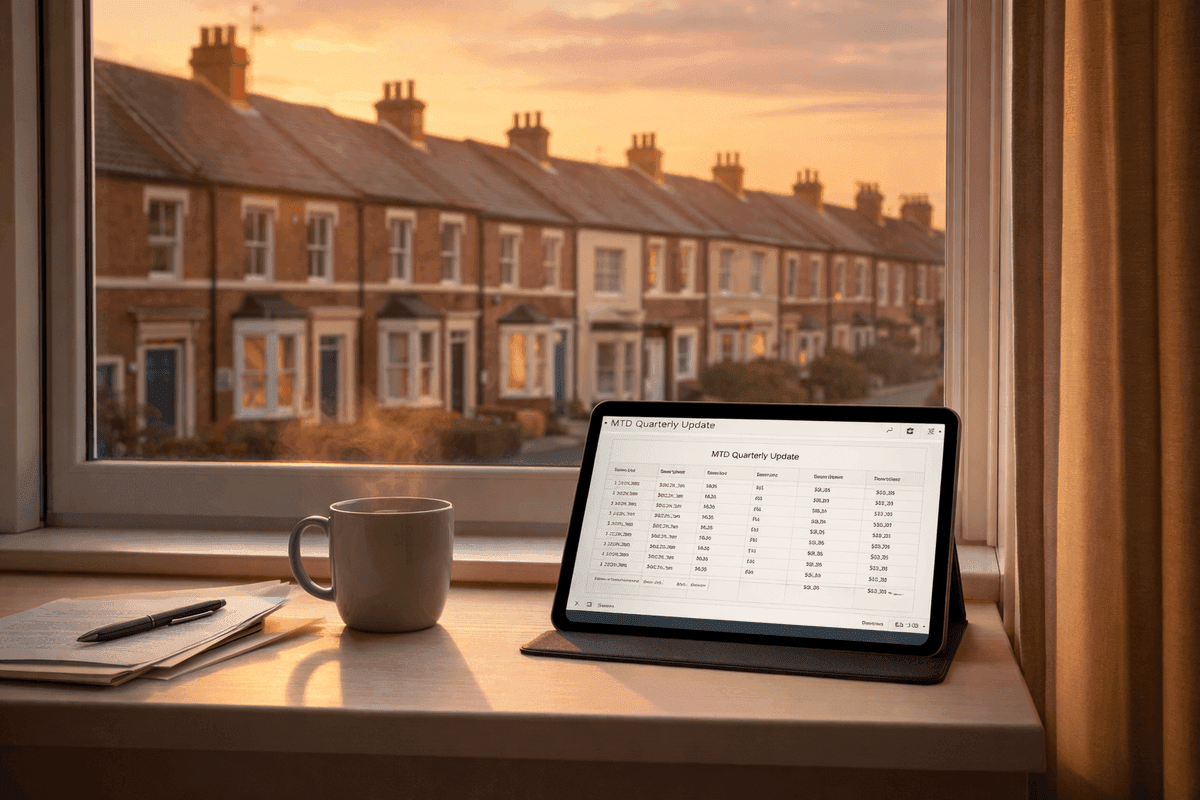
Why is flonancial free? What's the catch?
There isn't one. Your spreadsheet is parsed in your browser, the file never touches our servers. HMRC's API is free to use. We never see your individual transactions or bank details, we don't sell your information, and we don't show you ads. The mandatory MTD pieces, quarterly updates and the year-end tax return, will always be free.