
Making Tax Digital for Landlords, Free Software and What You Need to Know
UK landlords with qualifying income over £50,000 may already need to use MTD. Learn what's required and how to submit supported quarterly updates for free.
Published 5 Mar 2026 · Updated 21 Oct 2026
If you earn rental income from UK property and your qualifying income exceeds £50,000, Making Tax Digital for Income Tax has applied to you since 6 April 2026.
This guide covers what landlords need to know, what changes, and how to submit your quarterly updates without switching to expensive accounting software.
Who is affected?
You need to comply with MTD if:
- You receive rental income from UK property
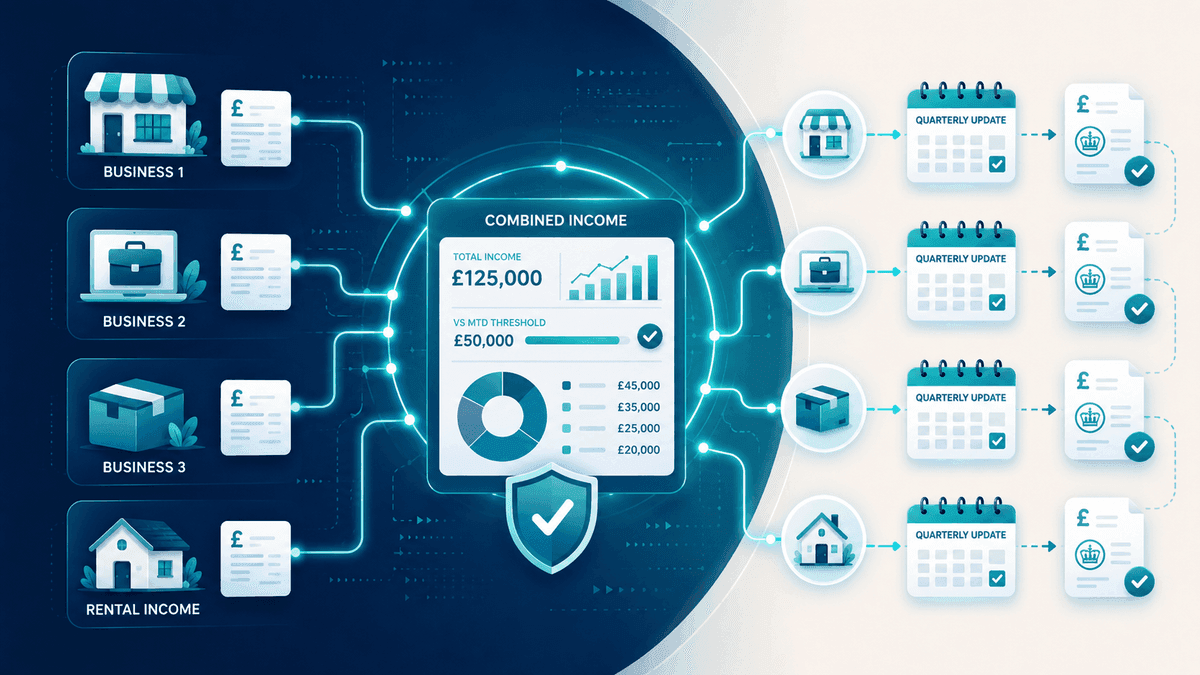
- Your qualifying income (self-employment and/or UK property income, before expenses) exceeds £50,000. Employment (PAYE) and pension income do not count towards this threshold.
This threshold drops to £30,000 from April 2027 and £20,000 from April 2028.
What do landlords need to submit?
Four quarterly updates per year, each containing:
- Rental income, your total rent received for the period
- Expenses, your total allowable expenses (repairs, insurance, agent fees, etc.)
- Other income, insurance payouts, grants, etc. (usually zero)
These are cumulative year-to-date figures, not just the quarter's numbers.
What expenses can landlords claim?
Common allowable expenses for landlords include:
- Letting agent fees and management costs
- Repairs and maintenance (not improvements)
- Insurance premiums
- Ground rent and service charges
- Accountancy fees
- Travel to properties for maintenance
- Advertising for tenants
Note: for residential landlords, mortgage interest isn't an ordinary allowable expense. Under MTD it must be reported to HMRC separately in your quarterly updates as a residential finance cost, with the related 20% tax reducer calculated at year-end. Flonancial asks for residential finance costs as their own total, separate from ordinary expenses, and sends them to HMRC in that category.
Do I need special software?
You need HMRC-compatible software to submit your updates. But you don't need a full property management platform. If you already track your rental income and expenses in a spreadsheet, bridging software like flonancial will submit your figures to HMRC for free.
What about jointly-owned property?
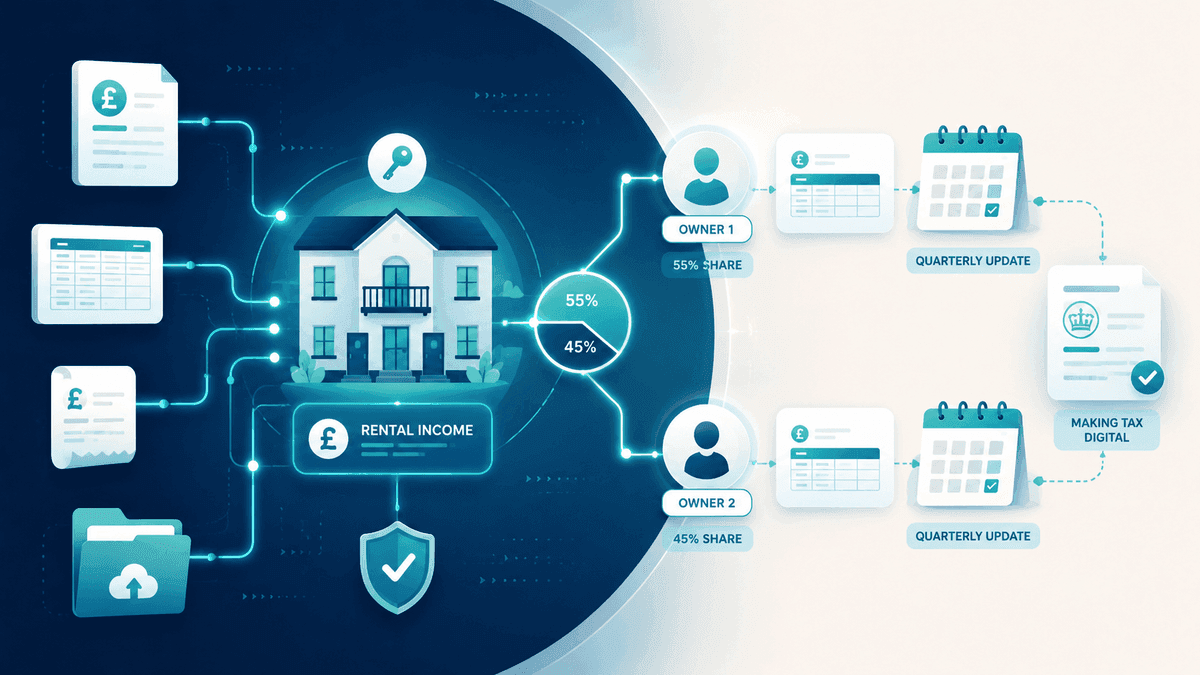
If you own property jointly (for example with a spouse), each owner submits their own MTD updates for their share of the income and expenses. You'll each need your own flonancial account connected to your own HMRC Government Gateway.
Multiple properties
All your UK rental properties are treated as a single property business by HMRC. You submit one set of figures covering all your properties combined, you don't need to file separately for each property.
Getting started
Flonancial supports UK property businesses and is free for individual landlords. Upload your rental spreadsheet, pick the cells with your totals, and submit to HMRC in minutes.
More on landlords

Why is flonancial free? What's the catch?
There isn't one. Your spreadsheet is parsed in your browser, the file never touches our servers. HMRC's API is free to use. We never see your individual transactions or bank details, we don't sell your information, and we don't show you ads. The mandatory MTD pieces, quarterly updates and the year-end tax return, will always be free.